Dolly Parton Died at 80. She Spent a Lifetime Showing Women You Never Had to Be Just One Thing 🕊️🎼💛
The singer, songwriter, actor, businesswoman and philanthropist died in Nashville on 25th August, leaving behind a legacy that reaches far beyond country music.
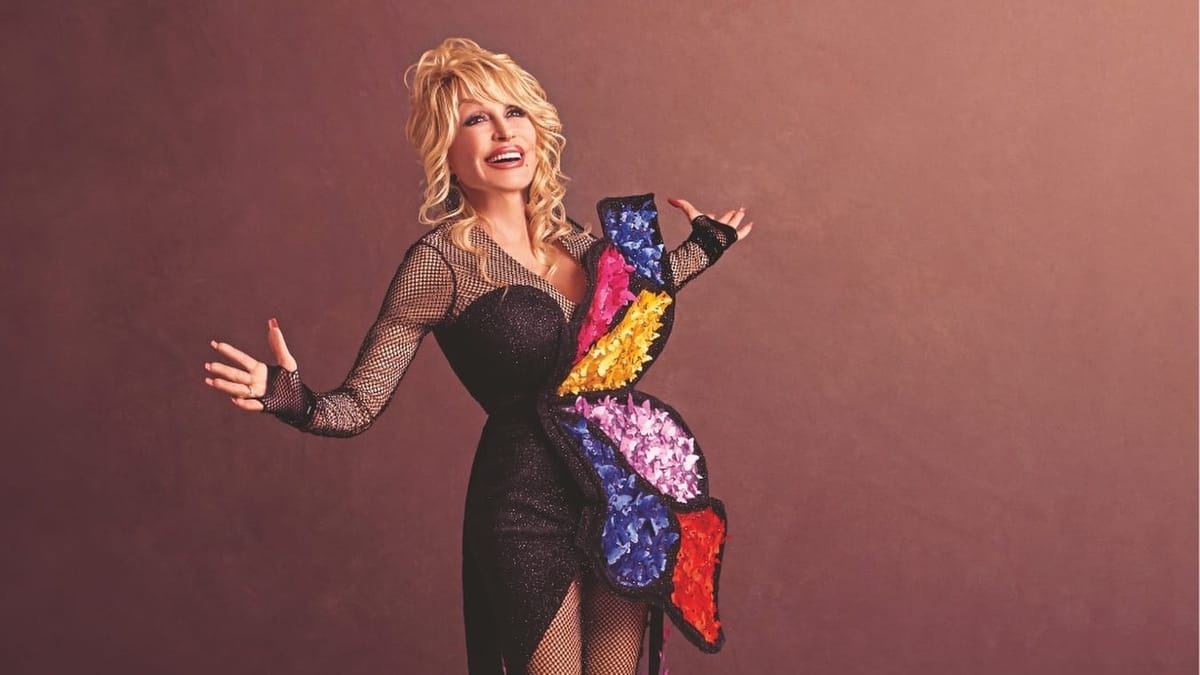

Dolly Parton, the singer and songwriter whose work reached from country music and Hollywood to business and children’s literacy, died in Nashville on Tuesday 25th August. She was 80.
Her family announced her death through Parton’s official website, saying that she died peacefully and would be remembered for her music, wit, warmth and generosity. A separate statement from her representatives said she had faced a brief battle with cancer, although no type of cancer or further medical details have been disclosed.
At Parton’s request, a private service will be held for her immediate family. Instead of sending flowers, her family has asked those wishing to honour her to donate to Dolly Parton’s Imagination Library, the book-gifting programme she founded more than 30 years ago.
Parton never seemed particularly interested in choosing one version of herself. She could write the song, sing the song, protect the song, turn up wearing enough rhinestones to interfere with nearby lighting and then use the money and influence she had accumulated to put books into children’s homes.
Her career lasted seven decades and produced some of country music’s most recognisable songs, including Jolene, Coat of Many Colors, 9 to 5, and I Will Always Love You. She sold more than 100 million records worldwide, won 11 Grammy Awards, including the Recording Academy’s Lifetime Achievement Award.
Parton’s understanding of the industry was as important to her career as the awards it produced. She wrote thousands of songs and understood early that creating the work meant little if she did not also pay attention to who controlled it.
When Elvis Presley wanted to record I Will Always Love You, his manager, Colonel Tom Parker, required a share of the song’s publishing rights as part of the proposed deal. Parton refused, later explaining that although the decision was painful, she could not surrender half of one of the most important copyrights in her catalogue.
Whitney Houston’s recording became a worldwide success nearly two decades later, while Parton continued to benefit from the publishing she had protected. It is one of the most repeated stories from her career because it showed that her warmth and generosity did not make her careless about her work or what it was worth.
Women are often encouraged to be grateful for an opportunity and quiet about its terms, particularly in creative industries where exposure is sometimes presented as a substitute for ownership. Parton knew the song and the rights attached to it were part of the same conversation.
She understood the value of her image too, right down to the wigs, nails and rhinestones. Her colour and unapologetic glamour became as recognisable as her voice, but none of it sat separately from the woman doing the work. She was a songwriter, producer, performer and businesswoman who knew both her image and her industry inside out.
There has long been a version of professional womanhood that asks women to edit themselves before they can be taken seriously. They can be ambitious, but not intimidating; feminine, but not too feminine; interested in clothes, but never enough for that interest to become noticeable.
Parton did not accept those restrictions. She knew how people perceived her, frequently made the joke before anybody else could and then carried on making decisions about her career. Her appearance was neither a phase she outgrew nor something she discarded once she had accumulated enough power to command respect.
Her style changed over the years, but there was rarely any doubt that the person underneath it had already decided how she wanted to move through the world. She was not waiting for the culture around her to approve it first.
Parton’s career did not travel in one direction. The 1980 film 9 to 5, in which she starred alongside Jane Fonda and Lily Tomlin, placed her at the centre of a cultural conversation about women, power and workplaces largely designed without them in mind. The title song, which Parton wrote and performed, became an anthem for working women while earning her an Academy Award nomination and two Grammy Awards.
Away from music and film, she developed businesses around her work and invested in the Tennessee region where she had grown up. In 1986, she partnered with Herschend Family Entertainment to create Dollywood in Pigeon Forge, helping to turn the attraction into a major tourism business and an important local employer.
She continued making music while taking on film roles, developing businesses, writing books and producing television projects. Parton was still recording new material well into her seventies and eighties, without treating any new chapter as a reason to close the one before it.
One of the most enduring parts of her work may ultimately be found away from stages and screens altogether. Parton established Dolly Parton’s Imagination Library in 1995, inspired by her father, Robert Lee Parton, who had not learned to read or write.
The programme began by providing books to young children in her home county in Tennessee and later grew into an international book-gifting scheme. It has now sent more than 300 million free books to children across the United States, Canada, the UK, Australia and the Republic of Ireland.
Parton launched the programme in the UK in December 2007, with the first books delivered the following year. Through local partners, enrolled children receive an age-appropriate book in the post every month from birth until the age of five, at no cost to their families. Availability depends on whether the programme operates locally, and UK families can check provision in their area through the Imagination Library website.
The effect extends beyond the parcel arriving through the door. In the programme’s latest UK parent survey, published in June 2026, 27.9% of participating families said they visited their local library more often after joining. Libraries also reported greater attendance at children’s events, increased borrowing and stronger engagement with families.
Parton became known around the world for the stories she told through her songs, then spent three decades helping children begin discovering stories of their own. The Imagination Library was not a short-lived celebrity campaign with her name attached to it. It became a substantial part of her life’s work.
The same practical approach could be seen elsewhere in her philanthropy. After wildfires devastated communities in Tennessee’s Sevier County in 2016, her My People Fund provided monthly payments to families whose homes had been destroyed or left uninhabitable.
In 2020, Parton donated $1 million to coronavirus research at Vanderbilt University Medical Center. The funding supported research at Vanderbilt, including work that contributed to the development of the Moderna Covid-19 vaccine.
Her public generosity was one reason affection for her travelled far beyond country music. It was also consistent with the way she approached the rest of her life. She enjoyed her success, but never behaved as though it existed separately from the place and people who had helped shape her.
Dolly Parton spent much of her career in industries that preferred women to be easy to categorise, but no single description held her for long. She cared about her appearance, understood the value of her work, built businesses and gave generously to the communities that mattered to her.
She leaves behind the songs, films, businesses, books and an extraordinary amount of glitter. More than that, she lived without reducing herself for anybody else’s convenience. She was unmistakably Dolly, and she made room for other women to believe they could be fully themselves too.