
Louis Theroux’s Inside the Manosphere and the Gender Divide We Can’t Ignore 👀
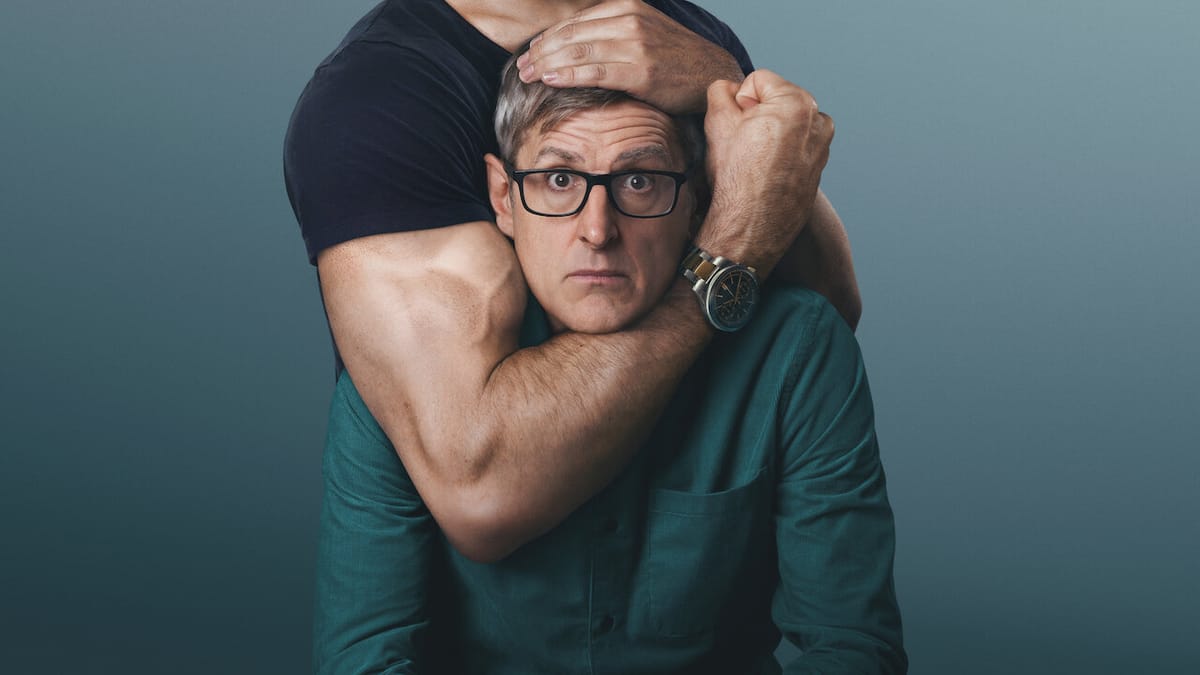

The manosphere isn’t just digital noise, it’s shaping how women are spoken about, understood and treated in real life.
The internet has always had its corners, spaces where ideas grow, evolve and sometimes spiral. But right now, one corner is getting louder and harder to ignore. Louis Theroux’s Inside the Manosphere pulls that space into focus, not as a niche subculture sitting on the fringes, but as something far more embedded in everyday online life. Through conversations with creators and communities within this world, the documentary shows how these ideas are being packaged, shared and crucially normalised.
What presents itself as a response to changing gender dynamics, shifting roles, evolving expectations and a sense of frustration quickly becomes something more fixed. Conversations around masculinity, dating and power are often framed in absolutes, leaving little room for nuance and even less for growth. And for women, the impact isn’t theoretical. Much of the language explored centres around how women are defined, reduced to ideas of value, desirability and usefulness. Not in isolated forums, but across platforms designed to amplify and distribute. What was once contained is now circulating widely, shaping how women are discussed in real time.
This content doesn’t always present as extreme. It’s often conversational, entertaining and easy to engage with, which is exactly why it travels. What’s positioned as advice in one space can land as judgement in another, and women are left navigating both. At the same time, the documentary doesn’t flatten everything into one narrative. There are moments of vulnerability, confusion and men trying to make sense of identity, belonging and expectation. That complexity matters, but it exists alongside ideologies that feel increasingly rigid and, at times, deeply reductive.
At the same time, not everyone watching the documentary is walking away with the same conclusion. Across social media, some viewers have pushed the conversation further, pointing to what sits underneath the surface. In one response, creator @yourmoneymatesarah highlights the vulnerability shown by some of the men featured, but questions whether the frustration being directed at women is misplaced. Instead, she frames it as a reaction to wider systems, capitalism, patriarchy and the pressure to perform, provide and succeed within them. It’s a perspective that shifts the focus entirely. Because if that’s the case, what’s playing out online isn’t just about gender, it’s about displacement. Frustration that doesn’t quite know where to land, and ends up being directed at the most visible target. That doesn’t excuse the rhetoric. But it does complicate it.
The tension sits in how those realities coexist. As these conversations grow, so does the gap between how they are experienced. What feels like guidance or self-improvement in one context can feel like criticism or dismissal in another, and that disconnect doesn’t stay online. It shows up in dating, in workplaces and in everyday interactions.
Fashion, beauty and media don’t exist in isolation. They reflect what’s happening beneath the surface. The way women are spoken about online inevitably shapes how they are represented, marketed to and engaged with across industries. It influences narratives around confidence, identity and worth, often subtly but with lasting impact. The industry doesn’t sit outside culture. It mirrors it, sometimes more than it challenges it.
The conversation isn’t new. The difference now is how widely it’s being seen, and how normalised it’s becoming. The question isn’t just what these spaces are saying, but what happens in response. From platforms deciding what they amplify, to brands considering where they align, to audiences choosing what they engage with, the next phase of this conversation will be shaped by action, not just awareness.
Theroux’s documentary doesn’t offer neat answers, and it doesn’t try to. What it does is open up a conversation that feels increasingly difficult to ignore. It asks viewers to sit with what they’re seeing, question what’s being presented and recognise how quickly these narratives are evolving. Because the manosphere isn’t just about men. It’s about how gender, power and perception are being renegotiated in real time, and who gets to define the terms.