Remembering Kanya King, The Woman Who Built It Anyway 👑🎵🕊️🤍
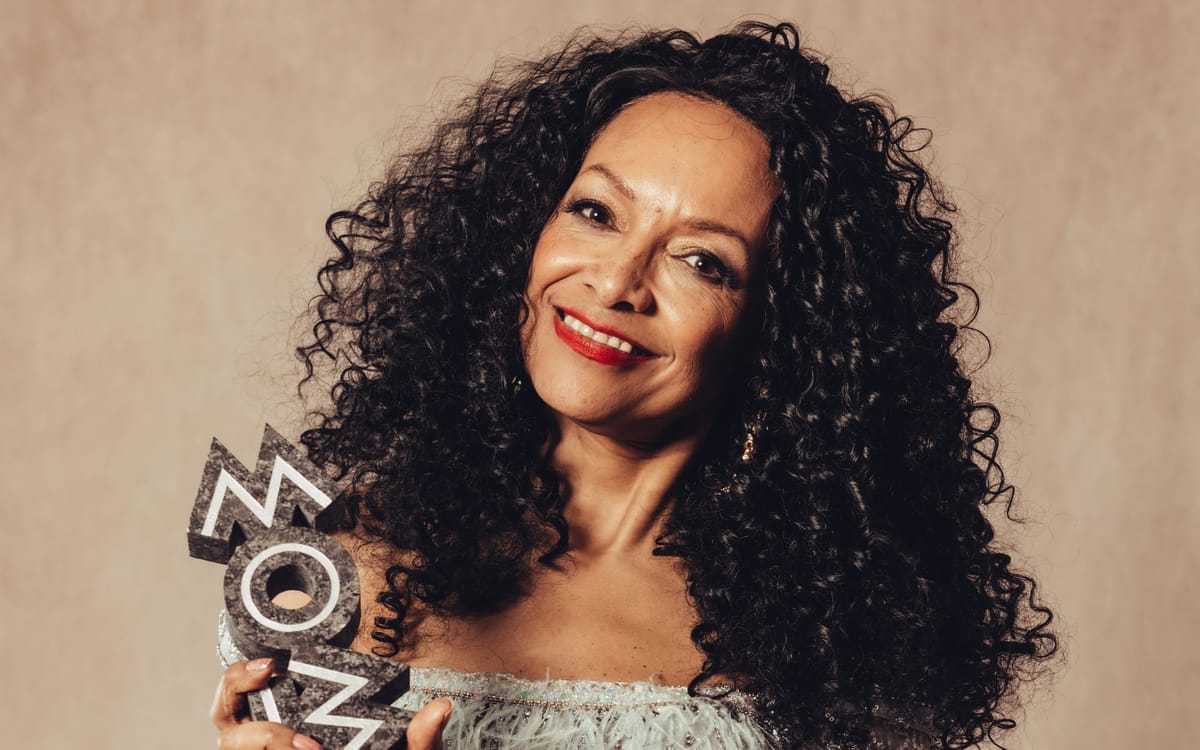
Kanya King founded the MOBO Awards with no backing, no industry support, and a remortgaged home. She was 57 when she died. She was still going. Fifty-seven. That's the number that keeps stopping people. Not because it's a shock in the abstract, but because anyone who watched Kanya King knows she had no intention of slowing down. She was still building. Still in the room. Still pushing for artists who needed someone in their corner.
She passed away on 3rd June after a battle with colon cancer. Surrounded by family. Surrounded by love. The MOBO Organisation released a statement describing her as one of the music world's most fearless champions, and within hours, the tributes and comments came pouring in from every corner of British music and beyond. Not because they had to. Because she had touched almost all of them.
And that, honestly, is the whole story of Kanya King. The reach. The people. The fact that when she died, Idris Elba posted that she was gone too soon. Alesha Dixon said her impact was immeasurable. Stormzy said nothing in words and everything in emojis. Craig David, who has been in that MOBO family since the beginning, went to the comments and wrote: "Kanya, your legacy will live on forever through every single one of us you touched with your beautiful heart. We love you." London Mayor Sadiq Khan and Culture Secretary Lisa Nandy both put out statements. These are not people who show up for the sake of it. These are artists, public figures, and fans whose lives were shaped, in some way, by what Kanya King built. So what exactly did she build?
In 1996, she was a single mother from a Kilburn council estate. She had a vision for an awards show that would celebrate music of Black origin. Hip-hop, grime, R&B, soul, reggae, Afrobeats, jazz. Music that was filling arenas and shaping a generation, while the mainstream industry kept looking the other way. She was told there was no market. That it was too niche. That the industry wasn't interested. She remortgaged her home, and six weeks later, the first MOBO Awards was on television, and nothing was ever the same again.
Thirty Years of Proof
Think about the names. Stormzy. Little Simz. RAYE. Craig David. Soul II Soul. Ms. Dynamite. So Solid Crew. Krept & Konan. Kano. Central Cee. Olivia Dean. Amy Winehouse. Sade. Artists who went on to define British music, win Grammys, headline Glastonbury, change what this country sounds like. The MOBO Awards saw them. Celebrated them. Gave them a stage at a time when the mainstream industry was still figuring out whether they were worth the risk. Kanya King never waited for the industry to catch up. She just kept going.
The awards grew. The platform reached hundreds of millions worldwide. She built MOBO Unsung for emerging talent, the MOBO Fringe Festival, MOBO Musicians Amplified, House of MOBO. She took the ceremony to cities across the UK, Glasgow, Leeds, Sheffield, Newcastle, Coventry, Liverpool, because she understood that the music did not belong only to London. She was awarded an MBE in 1999. A CBE in 2018. And in 2025, an Ivors Academy Honour, which she accepted, characteristically, in the middle of what she described as a difficult week health-wise, and still managed to inspire everyone in the room.
And in December 2024, she revealed she had been diagnosed with stage four bowel cancer, and she kept working. In February 2025, just months after that diagnosis, she stood on the MOBO stage in Newcastle and told the audience: "I never allowed someone to define my limits. Not in life. Not in business. And I’m certainly not going to have that happen now." She got to see the 30th anniversary. She got to stand in that room and feel what three decades of refusing to give up looks like when it's full of people and music and proof. That matters. We are glad she had that.
What She Was Really Saying
Kanya King's story is not just a music industry story. It is a story about what happens when a woman decides that a closed door is not the end of the conversation. When she decides that being told no is data, not destiny. She was a Black woman. A single mother. She had no institutional backing. She had no industry co-sign. She had a vision and she backed herself, literally, with the only asset she had. And she won. Not just commercially, not just critically, but in the way that actually counts: she changed people's lives. She created careers. She gave artists a platform that told them they were worth celebrating, at a time when the rest of the industry couldn't quite bring itself to say it.
That is the message she left. Not in a speech, not in an interview, but in thirty years of showing up and building, even when no one was watching, even when the industry doubted her, even when she was sick. If you have a dream that the world keeps telling you is too niche, too small, too much, not enough: look at what Kanya King did with a remortgaged house and a vision no one else believed in. She built it. All of it. Rest in power, Kanya King. 57 was nowhere near enough time. But my goodness, look at what you did with it.