
Public Sexual Harassment Is Now Illegal But What Actually Changes? 🚨
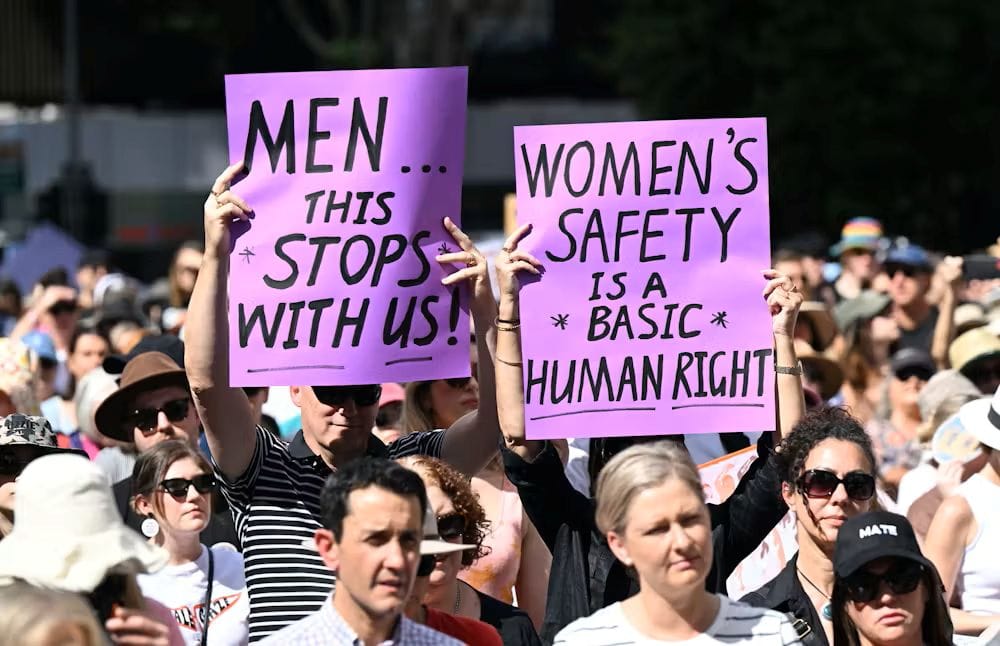

A new sex-based public harassment offence is now in force in England and Wales, with offenders facing up to two years in prison. But for women who have spent years navigating this behaviour, the real question is whether anything meaningfully shifts. Public sexual harassment isn’t new. The law recognising it more clearly is.
For years, it has existed in that space between being widely experienced and quietly dismissed, reduced to something women are expected to tolerate, work around or ignore. The comments, the following, the blocking of paths, the invasion of space, and the moments that force women to calculate risk in real time and adjust accordingly. This is behaviour that many women have adapted their lives around long before it was clearly recognised in law.
From 1 April 2026, a new offence has come into force in England and Wales targeting harassment carried out because of a person’s sex or presumed sex. Introduced through the Protection from Sex-based Harassment in Public Act 2023, it inserts a new section into the Public Order Act 1986, allowing for stronger charges and a potential sentence of up to two years in prison. This is not a completely new category of behaviour being criminalised. It is behaviour that has always existed, now being more clearly defined, and that distinction matters.
The offence applies to intentional conduct that causes harassment, alarm or distress in public spaces, including streets, public transport, shops and venues, and in some cases, online environments where the behaviour meets the same threshold. It also moves beyond the narrow way these conversations are often framed. This is not just about isolated comments shouted in passing. It includes persistent sexual remarks or gestures, obstructing someone’s movement, deliberately invading personal space, unwanted touching, and behaviour that creates a sense of threat.
What actually counts as public sexual harassment?
For many women, none of this will feel unfamiliar. Data continues to show that women, particularly younger women, are disproportionately affected by sexual harassment, much of it taking place in public. The behaviour this law addresses is not exceptional. It is routine, and that is exactly why this change carries weight. Not because it suddenly solves the issue, but because it removes some of the ambiguity that has allowed it to be minimised for so long. It creates a clearer route for police and prosecutors to recognise sex-based harassment as a serious offence, rather than something that sits just below the threshold of action.
There are, however, realities that sit alongside that progress. The offence still requires proof. It must be shown that the behaviour was intentional, that it caused distress, and that it was driven by the victim’s sex or presumed sex. The impact on the victim is central, not assumed, which means enforcement will define everything. How police interpret the law, how consistently cases are handled, whether victims feel believed, and whether reports lead to action will determine whether this change has any real-world effect.
Guidance suggests victims should be referred to support services quickly and that officers should take a more joined-up approach when handling cases. On paper, that is progress. In practice, it will depend entirely on whether those standards are met. The offence also sits within a wider legal framework, meaning other charges such as stalking or harassment may still apply depending on the circumstances. The system has not been simplified. It has been extended.
For organisations like Our Streets Now, this moment has been years in the making. The campaign group has spent the past seven years pushing for public sexual harassment to be recognised in law, building momentum through petitions, public pressure and sustained advocacy. Their work has consistently focused on the everyday reality of harassment in public spaces and the impact it has on how women and girls move through the world. This change is not sudden. It is the result of that pressure finally being acknowledged.
Public sexual harassment has never been only a legal issue. It is a cultural one. It exists in what is dismissed as harmless, what is excused as normal, and what people are told not to make a fuss about. It exists in the gap between what women experience and what others are willing to acknowledge. This change begins to close that gap legally. It does not close it socially.
That reality has not changed overnight. The law has changed. Whether behaviour follows will decide whether this is progress, or simply recognition that came years too late.