
How National Is British Fashion, Really? 📍👗
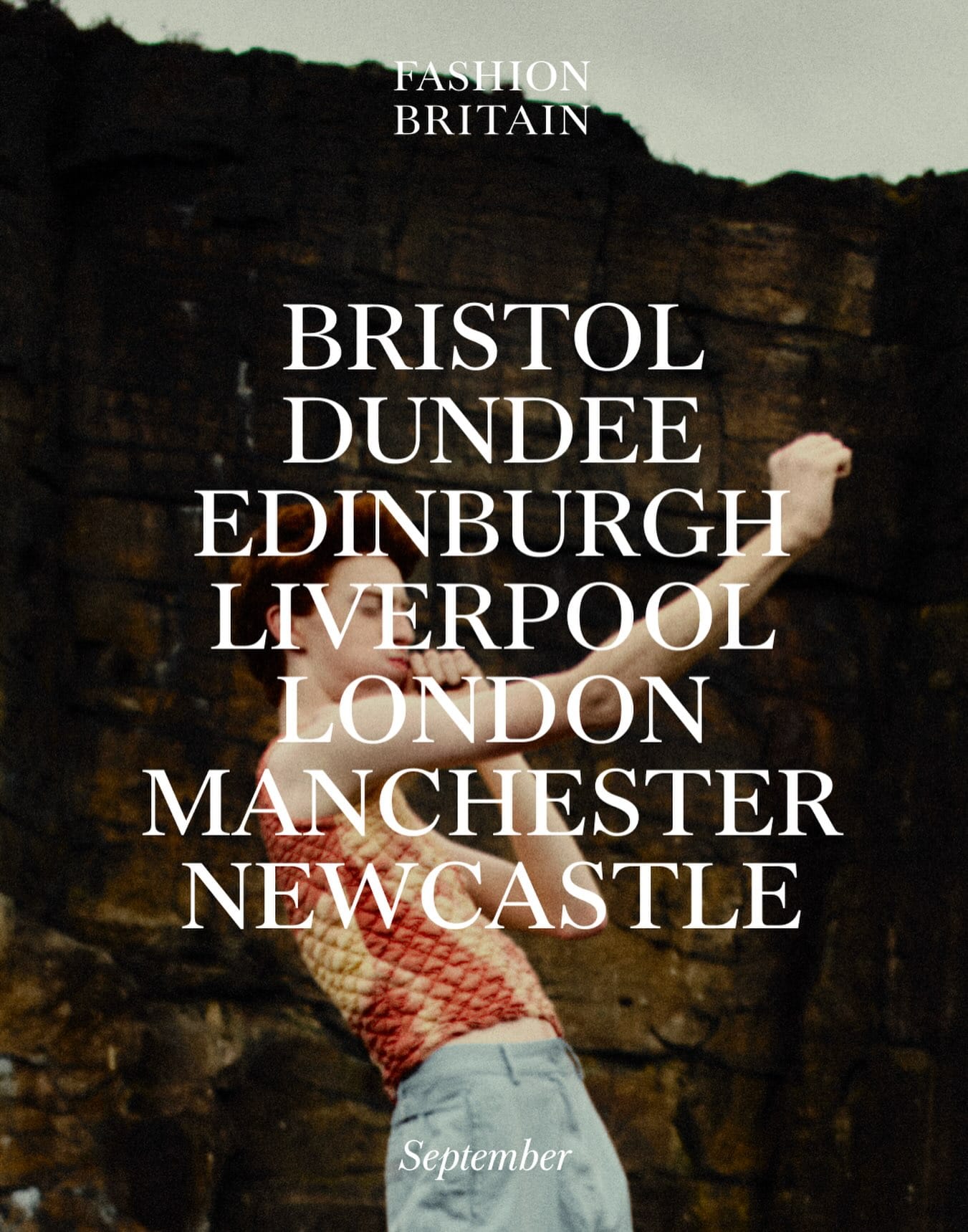
Fashion Britain is bringing more than 1,000 events to seven UK cities this September. It is a welcome invitation to experience fashion closer to home, but can British fashion become truly national once the events are over?


British fashion can feel close enough to follow online, yet strangely distant in real life. Watching a runway show on your phone is easy. Attending events or meeting the people behind the clothes can require a costly train ticket or an invitation that never reaches your inbox.
Fashion Britain offers a welcome change this September. The British Fashion Council says more than 1,000 events will take place across seven cities, bringing designer conversations, exhibitions, retail experiences, performances and other public events to London, Manchester, Liverpool, Newcastle, Bristol, Edinburgh and Dundee. Many headline talks are free, so people can take part without the usual fashion week connections.
There are strong reasons to pay attention. Aitor Throup will appear at Manchester Art Gallery. Nicholas Daley and Charles Jeffrey will speak at V&A Dundee, while Patrick McDowell and Talia Byre will be at Liverpool’s Walker Art Gallery. Bristol has a designer panel at M Shed, and Newcastle’s programme includes the Future Heritage student showcase.
The programme also reaches places where people already shop. Liverpool ONE, Trafford Centre and Westfield are involved, alongside eBay, Kurt Geiger, TONI&GUY and Marks & Spencer. This lets shoppers, students and fashion fans encounter British style in familiar public spaces.
The programme challenges a familiar habit. British fashion is often discussed as though it begins and ends in London, even though the clothes, skills and ideas that shape it come from across the country. Fashion students train in Birmingham, Cardiff, Edinburgh, Leeds, Manchester, Nottingham and many other places. Retailers and independent boutiques help local style communities grow. Manufacturing and textile knowledge remain rooted in towns and regions that rarely dominate the fashion conversation.
Some distinctive British fashion businesses have made location part of their identity. Hiut Denim revived jeans production in Cardigan. Private White V.C. makes clothing in Manchester, Community Clothing operates from Blackburn and Mulberry’s manufacturing story is tied to Somerset. Their appeal comes partly from the places and skills behind the product.
Local fashion culture is not a lesser version of what happens in the capital. It can introduce you to different designers, makers and ways of dressing. For somebody hoping to work in fashion, however, enjoying that culture and building a career within it are not always the same thing.
Fashion Britain is meaningful progress, but seven cities cannot represent every fashion community in Britain. Birmingham is not on the announced list, despite being one of the country’s largest cities and home to fashion courses, creative businesses and Gymshark, which began in a Birmingham garage in 2012 and was valued at more than £1 billion in a 2020 investment deal. At Bullring, Zara now occupies two floors and Victoria’s Secret is trading again. Cardiff and Belfast are absent too, leaving Wales and Northern Ireland outside this first programme.
That does not make Fashion Britain a failure, nor does it tell us why particular cities were selected. The BFC has described the programme as the beginning of a longer ambition. It also builds on its City Wide Celebration, which expanded to Manchester and Newcastle in 2024, followed by Liverpool in 2025. The direction is positive. The question is how much further it can travel, and what each participating place will gain after September.
If you want to enjoy fashion, temporary events can open a valuable door. If you want to build a label or find a job, the door needs to lead somewhere. Designers need affordable workspace, places to make samples, trusted advice, buyers willing to stock new names and journalists who will keep watching after the launch party. Graduates need paid opportunities that do not force them to choose between moving to London and leaving fashion altogether.
This is where British fashion’s geography becomes more complicated. Research from the Creative Industries Policy and Evidence Centre identified 25 local fashion business clusters in Greater Manchester, showing that useful networks already exist beyond London. The same study found a much denser picture in the capital, with 82 clusters covering 12,527 firms in its sample. In simple terms, creative talent exists around Britain, but the people and services that can help turn an idea into a viable business are easier to find in some places than others.
The wider creative economy shows a similar imbalance. Creative PEC calculates that London and the M25 region generated 68% of UK creative industries gross value added in 2019. That figure covers the creative industries as a whole, not fashion employment, but it helps explain why ambitious people continue to feel pulled towards the capital. Jobs, investment and influential networks tend to gather where strong networks already exist.
Consider a fashion graduate in Birmingham, Newcastle, Cardiff, Glasgow or Belfast. Starting an online shop from home may be possible. Progressing can be harder if internships, buyer appointments, showrooms, media meetings and useful introductions still demand repeated travel to London. Access may exist on paper, but train fares, accommodation and time away from paid work can quietly decide who gets close enough to benefit from it.
At FROW, we have seen how that gap works. Since launching in Birmingham in 2013, we have provided internships to students who approached us directly as well as those referred by universities, offering fashion experience without requiring them to be based in London. Major events still required travel to the capital, but university referrals were not matched by sustained institutional support to help us continue delivering the placements. If universities want stronger routes into employment, the small businesses and creative platforms providing them need funding, coordination and long-term partnerships too.
A truly national fashion culture would not require every city to copy London. It would mean more people being able to discover designers, visit exhibitions, shop independently and meet creative communities near home. It would also mean that somebody with talent could study, find paid work, build a business and attract serious attention without their postcode becoming an obstacle.
The BFC says Fashion Britain aims to strengthen local creative economies and create lasting opportunities across the UK. The BFC could take that ambition further by helping universities build properly supported partnerships with regional organisations already connecting students to work. Its success should eventually be judged by what remains after September. That means more cities joining, regional designers gaining serious opportunities and students seeing a paid route from the classroom into the industry.
London will remain one of the world’s great fashion capitals, and nobody benefits from weakening it. The opportunity is to make its connections less exclusive to people who can live nearby. Fashion Britain can help by connecting regional talent with national audiences, while investing in the local networks that already exist.
This September, more people will be able to experience British fashion where they live. That is worth celebrating. The bigger prize is a country where they can also make it, work in it, sell it and be discovered without having to leave home first.